Selecting a Programmable Robot Platform for University Laboratories requires matching robot hardware, software support, and research goals. A suitable platform should support ROS/ROS 2, multiple sensors, open APIs, and long-term upgrades. In 2025, many university laboratories prefer modular mobile robots, robotic arms, and AI-enabled platforms because they allow students to develop navigation, vision, and control systems with the same hardware base. Platforms with expandable computing units, repeatable testing environments, and strong documentation usually provide better performance for 5–10 years of academic use.
Universities are investing more in programmable robots as robotics courses expand across engineering departments. A laboratory platform used by 50–200 students per year must handle repeated programming, hardware changes, and different research tasks without frequent replacement. In a 2024 survey of robotics education programs, more than 60% of institutions reported using ROS-compatible robots for teaching autonomous systems, because students can directly access navigation, perception, and control packages.
A university robot platform is selected for repeated learning and research use, not only for a single project. Hardware openness, software compatibility, and maintenance support determine whether the platform remains useful after several academic cycles.
The mechanical structure determines what types of projects students can complete. Wheeled robots are commonly used because they provide stable movement, lower maintenance requirements, and easier programming compared with legged systems. Differential-drive platforms are widely adopted for introductory courses, while omnidirectional robots are often selected for advanced navigation and warehouse automation studies.
| Robot type | Typical application | Common specifications |
|---|---|---|
| Wheeled mobile robot | SLAM, navigation, logistics research | 2–4 drive wheels, LiDAR, camera, IMU |
| Robotic arm | Manipulation and automation | 4–7 DOF, 0.5–10 kg payload |
| Quadruped robot | Dynamic movement research | 12–20+ joints, advanced control |
| Humanoid robot | Human–robot interaction | Full-body control systems |
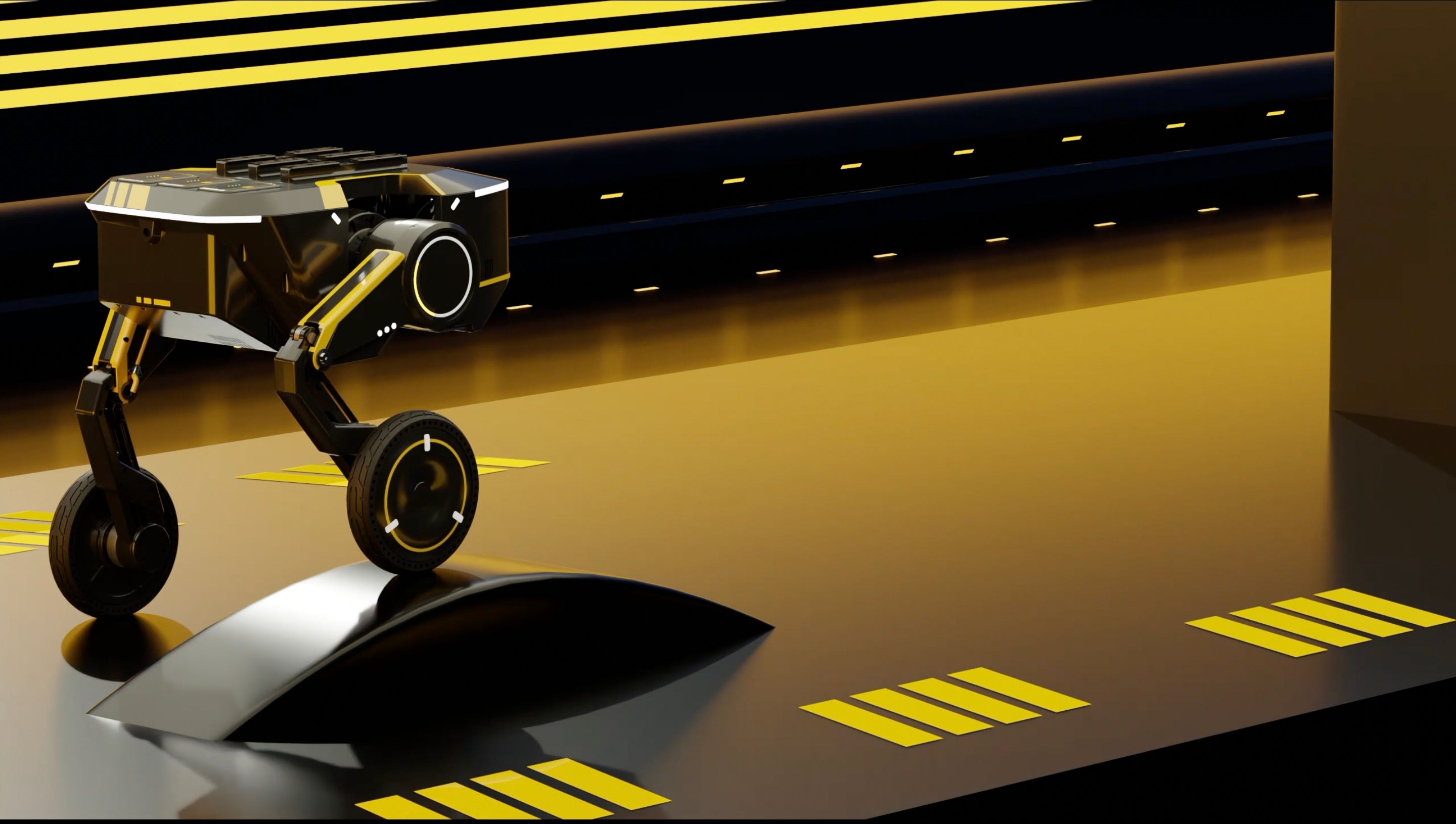
For laboratories focusing on mobile robotics, platforms such as DirectDriveTech wheeled robots provide examples of wheeled architectures designed around programmable control and research applications. Similar platforms are often evaluated according to wheel configuration, payload capacity, sensor integration, and software access.
The software environment has become as important as mechanical design. Since the release of ROS 2 in 2017, universities have increasingly adopted open middleware systems that support distributed robot applications. ROS 2 improves communication reliability through DDS-based messaging and supports multi-robot systems, real-time applications, and industrial communication standards.
A programmable platform should provide:
-
ROS/ROS 2 packages and examples;
-
Python and C++ development support;
-
Simulation models for Gazebo, Isaac Sim, or similar environments;
-
Open communication interfaces;
-
Access to sensor and actuator data.
A robot without accessible software tools may limit students to predefined demonstrations. In contrast, open platforms allow researchers to modify algorithms, replace sensors, and test new control methods.
Software accessibility determines how quickly students can move from classroom concepts to working robotic systems. Platforms with documented APIs usually reduce development time during courses and research projects.
Computing performance has also changed the requirements for university robots. Modern robotics courses increasingly include artificial intelligence methods such as object recognition, semantic mapping, and reinforcement learning. These applications require more processing power than traditional motor control tasks.
Typical computing configurations include:
| Computing unit | Application |
|---|---|
| ARM processor | Basic control and sensor communication |
| Intel-based computer | General robotics development |
| NVIDIA Jetson module | AI inference and computer vision |
| Desktop GPU workstation connection | Large-scale training and simulation |
For example, a vision-based navigation system processing 30 frames per second may require GPU acceleration when running deep learning models. A laboratory that trains 20–50 students each semester needs enough computing resources for multiple users to test algorithms without reducing system performance.
Sensor selection also affects the range of possible research projects. Most university mobile robots combine several sensing methods because no single sensor provides complete environmental information.
Common sensor combinations include:
| Sensor | Typical function |
|---|---|
| LiDAR | Distance measurement and mapping |
| RGB camera | Image recognition |
| Depth camera | 3D perception |
| IMU | Motion estimation |
| Encoder | Wheel movement measurement |
A navigation platform equipped with LiDAR and cameras can support autonomous mapping courses, while a robot with only basic ultrasonic sensors may be limited to simple obstacle avoidance. Many universities update sensors during a robot’s lifetime, making modular mounting systems important.
The selection process also depends on reliability and maintenance requirements. Laboratory robots may operate for several hours daily during teaching periods. A platform designed for academic environments should provide replaceable parts, clear manuals, and stable software updates.
Important evaluation points include:
| Category | Evaluation items |
|---|---|
| Hardware | Frame quality, motors, batteries, sensor mounts |
| Software | API access, documentation, community support |
| Maintenance | Spare parts, repair procedures, update frequency |
| Safety | Emergency stop, speed control, collision protection |
A 2023 analysis of university robotics laboratories found that equipment availability above 90% was associated with better course completion rates because students could access robots during scheduled classes and independent projects.
Laboratory robots are shared equipment. Reliability affects every course, research group, and student project that depends on the platform.
Cost planning requires looking beyond the purchase price. A robot purchased for a university laboratory is usually used for several years, so upgrade options and service availability influence long-term expenses. A low-cost platform may become unsuitable if sensors, computers, or software cannot be updated.
A practical budget evaluation may include:
| Cost item | Approximate proportion |
|---|---|
| Robot hardware | 50–70% |
| Sensors and accessories | 10–25% |
| Computing equipment | 10–20% |
| Maintenance and replacement parts | 5–15% |
For many teaching laboratories, a modular platform provides better resource use because the same robot can support several courses. A mobile robot may be used for programming classes in the first year, autonomous navigation courses in the second year, and research projects later.
Different laboratory goals require different platform choices. Undergraduate teaching usually prioritizes ease of programming and safety, while graduate research requires higher computing capability and hardware flexibility.
| Laboratory goal | Suitable platform |
|---|---|
| Basic programming education | Small mobile robots |
| Autonomous navigation | LiDAR-based mobile robots |
| Industrial automation research | Robotic arms |
| AI robotics research | GPU-equipped platforms |
| Advanced control studies | Legged or humanoid robots |
A platform evaluation process should begin with defining expected applications, then comparing technical specifications, testing software compatibility, and checking future expansion options. Many universities use pilot testing before purchasing multiple units because real classroom performance can differ from manufacturer specifications.
A short testing period with several students and researchers can reveal programming difficulty, sensor performance, and maintenance requirements before large-scale investment.
Simulation capability has become another important selection factor. Digital environments allow students to develop algorithms before using physical robots. In 2024, more than 70% of robotics education programs reported combining simulation tools with physical platforms because simulation reduces hardware dependence during early development stages.
A complete laboratory ecosystem often includes:
-
Physical robot platforms;
-
Simulation software;
-
Development computers;
-
Sensor libraries;
-
Teaching materials;
-
Research documentation.
Future university robot platforms will likely include stronger AI integration, improved simulation links, and more flexible hardware designs. Robots will increasingly combine traditional control methods with machine learning approaches, allowing students to study perception, planning, and interaction within the same platform.
When selecting a programmable robot platform, universities should focus on practical use scenarios, software openness, hardware expansion, and long-term support. A well-designed platform can support hundreds of student projects, multiple research directions, and continuous technology updates without requiring frequent replacement.