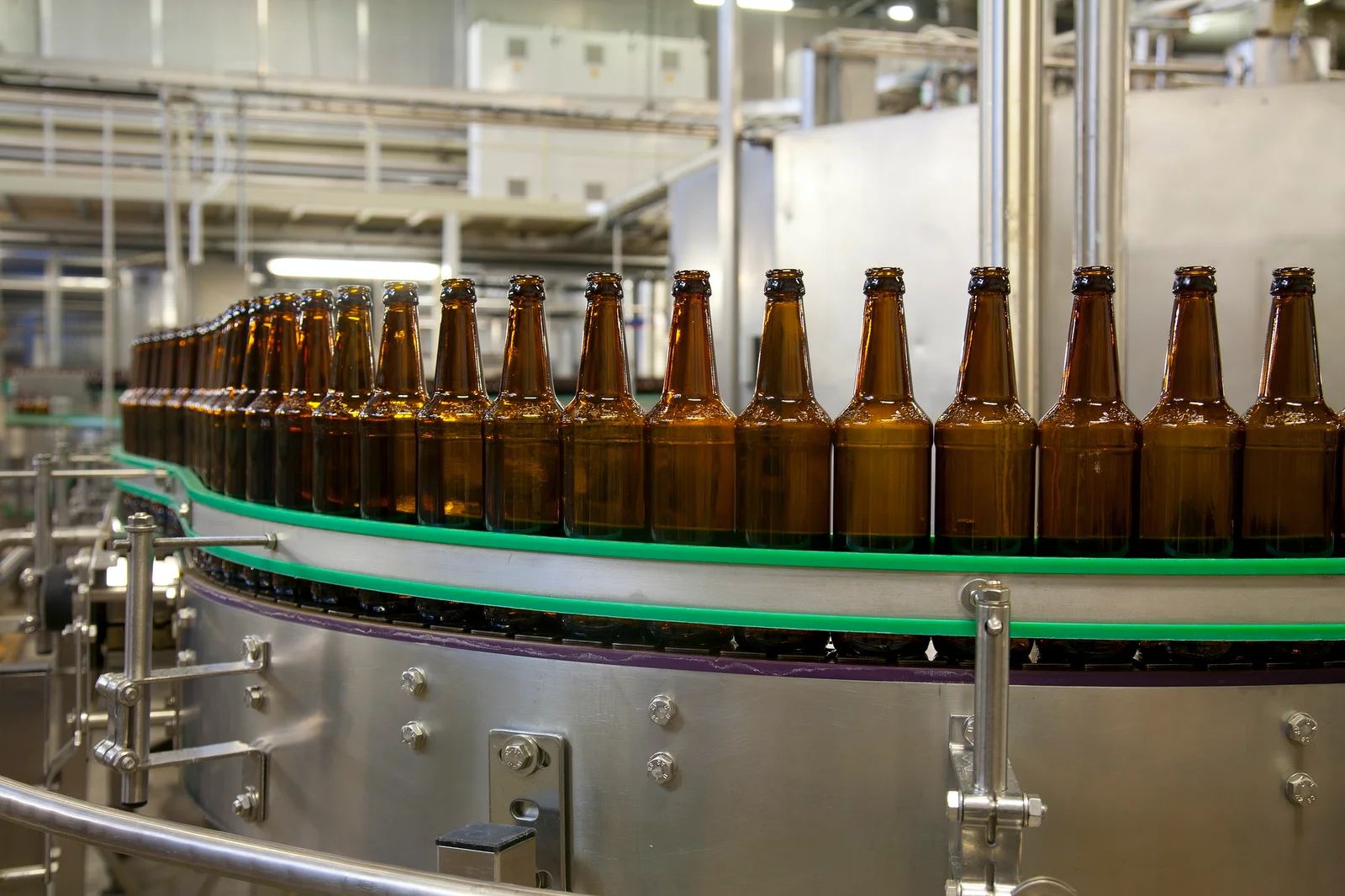
Modern craft beer equipment changes brewing by replacing many manual adjustments with measured control of temperature, flow, pressure, cooling, oxygen, and cleaning. Mash systems can hold rests within narrow temperature ranges, plate heat exchangers can cool near-boiling wort to yeast-pitching temperature in one transfer, and jacketed fermenters can maintain separate temperature programs for each tank. Packaging equipment can also target dissolved oxygen below 50 ppb, a level recommended in Brewers Association guidance for packaged beer. The result is not simply higher output: a brewery can repeat recipes more closely, record process conditions, reduce water and energy use, and manage more tanks with fewer manual adjustments.
A conventional small brewhouse may require a brewer to watch temperatures, adjust valves, control pumps, check runoff, move hoses, and change heating rates throughout a 6–10 hour brew day. Modern systems move much of that work into digital temperature probes, flow meters, variable-frequency pumps, pneumatic valves, programmable controllers, and tank-level monitoring. The brewer still sets the recipe and checks the beer, but the equipment keeps many operating conditions inside narrower ranges.
That change starts during mashing, where temperature affects the balance between fermentable sugars and larger dextrins. Many ale mashes operate around 64–68°C, while step-mash programs may use several rests rather than one fixed temperature. A sensor-controlled steam jacket or electric heating system can hold a selected rest without the repeated burner adjustment required by a basic vessel.
Mash mixing also changes when a vessel uses a motorized agitator. Uniform movement reduces hot and cool areas within several hundred liters of mash, while automated liquor dosing allows the brewer to repeat the same water-to-grain ratio from batch to batch. If a 1,000-liter system receives 650 liters of strike water, a measured dosing system can reproduce that volume without relying on sight marks or manual timing.
Repeatability becomes useful when the same pale ale is brewed 20, 50, or 100 times. A temperature difference of only a few degrees can change wort fermentability, so recording each mash rest gives the brewer something measurable to compare when attenuation or body changes.
Once conversion is complete, wort separation introduces another set of mechanical limits. A lauter tun has to move wort through a grain bed without compacting it enough to stop flow. Modern systems can combine adjustable rakes, differential-pressure readings, automated sparge water, and variable-speed pumps, allowing runoff to slow when resistance rises instead of waiting for a stuck bed.
Extraction matters because the same grain bill can produce different volumes of usable wort depending on brewhouse efficiency. A brewery operating at 70% efficiency will obtain less extract from the same malt mass than one operating at 80%. Better flow control cannot fix poor milling or unsuitable grain composition, but it can reduce losses caused by uneven runoff and rushed sparging.
The kettle then has to deliver heat at a controlled rate rather than simply reach 100°C. Steam jackets, internal calandrias, external boilers, and electric elements provide different heating patterns, yet all allow brewers to monitor boil time and evaporation more closely. If a 1,200-liter pre-boil volume falls to 1,080 liters, the calculated volume reduction is 10%, information that can be compared with later batches.
Modern whirlpool equipment extends that control after boiling. Tangential wort entry creates rotational movement that gathers hop material and protein solids toward the center of the vessel, while controlled pumping limits unnecessary turbulence. For breweries making heavily hopped beer, temperature control during this stage also lets the brewer separate a near-boiling bittering addition from a lower-temperature aroma addition.
The process then moves from heat production to heat removal, which is why plate heat exchangers have become standard equipment in commercial craft breweries. Wort close to boiling temperature can pass through thin stainless-steel plates while cold water flows in the opposite direction, giving a large heat-transfer area without requiring a large vessel.
A practical system may cool wort from roughly 95°C to an ale pitching range near 18–22°C during transfer. Water leaving the heat exchanger becomes warm or hot rather than being discarded immediately, so it can be collected for the next mash or for cleaning. That connection between cooling and water recovery becomes increasingly relevant when production moves from a few batches per week to several batches per day.
Water use shows how large the equipment effect can become. A Brewers Association water and wastewater manual reported an industry average of around 7 barrels of water for every barrel of beer, while some craft breweries had achieved ratios below 3:1. Earlier benchmarking data also showed strong differences by brewery size: the median reported ratio was 13.1 bbl/bbl for breweries below 1,000 barrels per year, compared with 4.5 bbl/bbl among breweries above 100,000 barrels per year.
| Process area | Basic setup | Modern equipment approach | Measurable operating point |
|---|---|---|---|
| Mashing | Manual heat adjustment | Sensor-controlled heating | About 64–68°C for many ale mashes |
| Wort cooling | Slow or separate cooling | Plate heat exchanger | Near 100°C to about 18–22°C |
| Fermentation | Room-level cooling | Jacketed tank cooling | Individual temperature program per tank |
| Packaging | Open or lightly controlled transfer | Purging and low-oxygen filling | Below 50 ppb DO target in BA guidance |
| Water management | Water discharged after use | Recovery and controlled CIP | Below 3:1 achieved by some brewers |
Fermentation becomes more controllable once cooling moves from the room to the vessel. Yeast releases heat while converting wort sugars into ethanol, carbon dioxide, and flavor-active compounds, so the liquid inside an active fermenter can warm even when the surrounding room remains stable. A glycol jacket removes heat from the tank wall as a temperature probe feeds readings to the controller.
Individual tank control also lets one cellar handle different products at the same time. One vessel can hold an ale around 18–20°C while another follows a cooler lager schedule, without forcing the entire room to match either tank. A brewery with 12 fermenters therefore gains 12 separately controlled fermentation environments rather than one shared room temperature.
Pressure-rated cylindroconical tanks add another operating variable. During fermentation, carbon dioxide can be released through a pressure-control device or partially retained with a spunding valve. Cone geometry also allows yeast and sediment to settle toward a lower outlet, so operators can remove solids without transferring the whole batch to another vessel.
Closed transfer becomes particularly useful once fermentation has finished. Beer can move from a fermenter into a purged bright tank through sanitary hoses while carbon dioxide supplies transfer pressure. Less contact with room air matters because oxygen picked up after fermentation can shorten flavor stability, especially in beer with strong hop aroma.
Packaging gives that oxygen control a measurable target. Brewers Association guidance for mobile canning recommends keeping dissolved oxygen in packaged beer below 50 parts per billion and notes that some mobile canning companies aim for less than 100 ppb. It also recommends checking total package oxygen at the beginning of every packaging run.
That target changes the role of the filler. A modern canning line can purge cans with carbon dioxide, control fill height, apply lids rapidly, monitor seams, and check package weight. Oxygen measurement then gives the brewer numerical feedback instead of relying only on how the beer tastes several weeks later.
Dry hopping benefits from the same closed-system approach. Instead of opening a large fermenter and adding hops directly through an exposed top port, a brewery can use a purged hop-dosing vessel or pressurized transfer device. A 1,000-liter IPA receiving 8 g/L of dry hops requires 8 kg of hops, so handling method becomes more important as both batch size and hop rate increase.
Sanitation changes just as much as production. Clean-in-place systems circulate water, alkaline cleaner, acid where required, and sanitizer through vessels and piping without requiring routine manual entry into the tank. Automated cycles can control pump time, liquid temperature, conductivity, and rinse sequence instead of leaving each stage to operator timing.
Cleaning also explains part of the large difference in brewery water ratios. The Brewers Association notes that breweries without effective conservation practices can use more than 10 gallons of water for 1 gallon of beer, while its broader guidance documents much lower ratios at efficient facilities. Reuse of final rinse water, controlled spray devices, measured CIP volumes, and heat recovery can reduce fresh-water demand without shortening required cleaning contact time.
Electrical and thermal use can be measured in the same way. The Brewers Association's five-year sustainability benchmarking work separates breweries into production groups below 1,000, 1,000–10,000, 10,000–100,000, and above 100,000 barrels per year, then compares water, electricity, natural gas, solid waste, and purchased CO₂ within those groups. The published methodology uses a rolling five-year dataset rather than treating one brewery size as representative of the entire sector.
Modern brewery design therefore works better when the equipment is treated as one connected production system rather than a collection of tanks. A larger mash tun adds little production capacity if fermentation space is already full; extra fermenters create another limit if the glycol chiller cannot remove their combined heat; a faster brewhouse may simply leave beer waiting if packaging capacity remains unchanged.
For a growing operation, a Brewery/Distillery/Winery All-In-One Solution can place brewhouse vessels, fermentation tanks, cooling, cleaning, transfer equipment, and packaging requirements within the same equipment plan. A 10-barrel brewhouse running two turns per day can theoretically send 20 barrels toward the cellar, so tank quantity, fermentation time, cooling capacity, and packaging speed must be sized around that production rhythm rather than around brewhouse volume alone.
Automation becomes more useful as the number of vessels increases. A programmable logic controller can log mash temperature, valve position, pump status, tank pressure, and fermentation temperature at regular intervals. If 10 temperature points are stored every minute during a 24-hour period, the system can produce 14,400 readings instead of a few handwritten checks.
Data does not replace tasting or laboratory work, but it gives the brewery a numerical record when a batch behaves differently. If apparent attenuation moves from 78% to 73%, staff can compare mash temperatures, yeast-pitch conditions, fermentation curves, cooling history, and transfer timing rather than relying on memory.
The same principle applies to maintenance. Temperature probes require calibration, pump seals wear, valve seats age, heat-exchanger plates can accumulate deposits, and glycol performance changes when system conditions change. A plant with 20 tanks creates far more inspection points than a brewpub with four, so scheduled maintenance becomes part of process control rather than an occasional repair task.
Modern equipment therefore changes what brewery staff spend time doing. Fewer minutes are spent repeatedly opening steam valves or watching a thermometer, while more time can go to yeast condition, dissolved oxygen readings, gravity checks, sensory evaluation, sanitation records, packaging measurements, and equipment inspection. A brewer still makes the beer; the equipment supplies repeatable temperatures, volumes, pressures, flow rates, and records that are difficult to maintain manually across hundreds of batches.