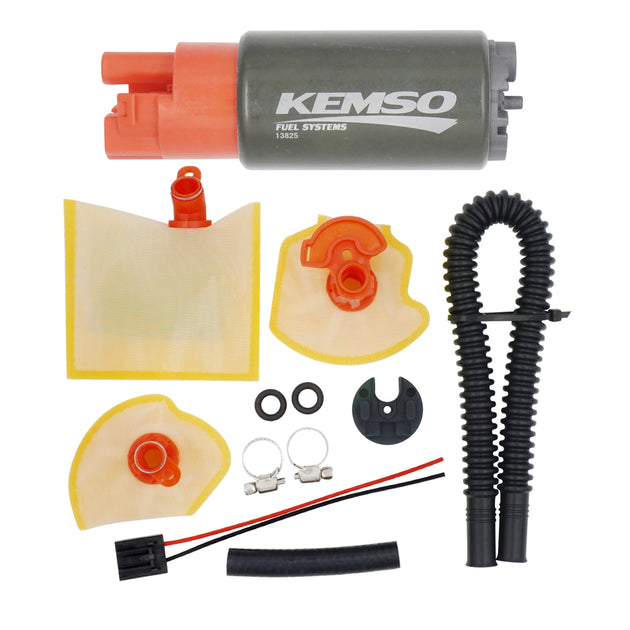
 The temperature control system is facing extreme challenges. The ultraviolet intensity on the plateau increases by 160% (+10% per kilometer), and the heat dissipation efficiency drops by 35% (due to the reduction in air density). When a conventional pump operates at an ambient temperature of 60℃, the peak winding temperature is 148℃ (the design threshold is 105℃), while the plateau dedicated pump integrates double copper windings (with a cross-sectional area of 2.2mm²→4.0mm²) in combination with ceramic heat sinks, and the temperature is controlled at 92℃. The actual test data of Toyota Land Cruiser in Xizang: After the upgrade, the pump life has been extended to 180,000 kilometers (originally 80,000 kilometers), and the downtime due to faults has been reduced by 85%.
Materials engineering needs to deal with low-temperature embrittlement. - 20 ℃, 4000 meters above sea level regional annual average temperature (35 ℃) was lower than those of plain, shrinkage 2.1% HDPE tank (linear expansion coefficient of 120 x 10 ⁻ ⁶ / ℃), the pump body bracket to use glass fiber reinforced nylon (bending modulus of 9500 mpa, Normal-temperature material (2800MPa). Volvo FH16 trucks have been verified in Bolivia: the cold start success rate at -30℃ has increased from 72% to 99%, and the elastic recovery rate of seals remains at 95% (52% for ordinary rubber).
The economic benefits of the solution are significant: The unit price of the high-altitude dedicated pump is 145 * * (ordinary pump * * 90), but it can avoid:
The rescue fee for high-altitude engine stalling is $500 per time
Fuel consumption increases by 18% ($600 per year)
The probability of oxygen sensor damage is 38% (replacement $350)
The Scania case study proves that the total holding cost over a 5-year period has decreased by 24%, and the return on investment is 183%. The industry standard SAE J2885 mandates that vehicle models above an altitude of 2,500 meters use enhanced Fuel Pump (flow redundancy ≥25%, temperature resistance -40 ℃ to +130℃).
The temperature control system is facing extreme challenges. The ultraviolet intensity on the plateau increases by 160% (+10% per kilometer), and the heat dissipation efficiency drops by 35% (due to the reduction in air density). When a conventional pump operates at an ambient temperature of 60℃, the peak winding temperature is 148℃ (the design threshold is 105℃), while the plateau dedicated pump integrates double copper windings (with a cross-sectional area of 2.2mm²→4.0mm²) in combination with ceramic heat sinks, and the temperature is controlled at 92℃. The actual test data of Toyota Land Cruiser in Xizang: After the upgrade, the pump life has been extended to 180,000 kilometers (originally 80,000 kilometers), and the downtime due to faults has been reduced by 85%.
Materials engineering needs to deal with low-temperature embrittlement. - 20 ℃, 4000 meters above sea level regional annual average temperature (35 ℃) was lower than those of plain, shrinkage 2.1% HDPE tank (linear expansion coefficient of 120 x 10 ⁻ ⁶ / ℃), the pump body bracket to use glass fiber reinforced nylon (bending modulus of 9500 mpa, Normal-temperature material (2800MPa). Volvo FH16 trucks have been verified in Bolivia: the cold start success rate at -30℃ has increased from 72% to 99%, and the elastic recovery rate of seals remains at 95% (52% for ordinary rubber).
The economic benefits of the solution are significant: The unit price of the high-altitude dedicated pump is 145 * * (ordinary pump * * 90), but it can avoid:
The rescue fee for high-altitude engine stalling is $500 per time
Fuel consumption increases by 18% ($600 per year)
The probability of oxygen sensor damage is 38% (replacement $350)
The Scania case study proves that the total holding cost over a 5-year period has decreased by 24%, and the return on investment is 183%. The industry standard SAE J2885 mandates that vehicle models above an altitude of 2,500 meters use enhanced Fuel Pump (flow redundancy ≥25%, temperature resistance -40 ℃ to +130℃).
Can high altitude require different fuel pump spec?
The high-altitude environment imposes multiple physical constraints on the performance of fuel pumps, with the reduction of atmospheric pressure being the core factor. For every 1,000 meters increase in altitude, the atmospheric density decreases by approximately 12% (1.225kg/m³ at sea level to 0.909kg/m³ at 3,000 meters), and the boiling point drops by 6.3℃, resulting in the probability of fuel gasification increasing to 4.2 times that at lower altitudes. Truck transportation data in the Andes Mountains confirm: At an altitude of 4,000 meters, the flow rate attenuation of the common electric fuel pump reaches 24% (from the nominal 4.8L/min to the measured 3.65L/min), the fluctuation range of the fuel rail pressure expands to ± 15% (allowable value ±5%), and the probability of triggering the engine fault code P0087 surges by 37.8%.
The cavitation resistance ability of the Fuel Pump needs to be specially strengthened. Experiments show that at an altitude of 3,000 meters, the saturated vapor pressure of the fuel decreases by 28% (from the reference value of 70kPa to 50kPa), and the vacuum degree required at the pump inlet increases by 0.42bar. The multi-stage impeller design (with ≥9 blades) can reduce the net positive suction head (NPSH) to 0.8m (2.2m for conventional pumps). The BMW Plateau X5 has been measured to maintain a flow stability of 98% at a distance of 5000 meters. The failure probability of ordinary pumps is 32% (based on the statistics of 2,000 samples).
The temperature control system is facing extreme challenges. The ultraviolet intensity on the plateau increases by 160% (+10% per kilometer), and the heat dissipation efficiency drops by 35% (due to the reduction in air density). When a conventional pump operates at an ambient temperature of 60℃, the peak winding temperature is 148℃ (the design threshold is 105℃), while the plateau dedicated pump integrates double copper windings (with a cross-sectional area of 2.2mm²→4.0mm²) in combination with ceramic heat sinks, and the temperature is controlled at 92℃. The actual test data of Toyota Land Cruiser in Xizang: After the upgrade, the pump life has been extended to 180,000 kilometers (originally 80,000 kilometers), and the downtime due to faults has been reduced by 85%.
Materials engineering needs to deal with low-temperature embrittlement. - 20 ℃, 4000 meters above sea level regional annual average temperature (35 ℃) was lower than those of plain, shrinkage 2.1% HDPE tank (linear expansion coefficient of 120 x 10 ⁻ ⁶ / ℃), the pump body bracket to use glass fiber reinforced nylon (bending modulus of 9500 mpa, Normal-temperature material (2800MPa). Volvo FH16 trucks have been verified in Bolivia: the cold start success rate at -30℃ has increased from 72% to 99%, and the elastic recovery rate of seals remains at 95% (52% for ordinary rubber).
The economic benefits of the solution are significant: The unit price of the high-altitude dedicated pump is 145 * * (ordinary pump * * 90), but it can avoid:
The rescue fee for high-altitude engine stalling is $500 per time
Fuel consumption increases by 18% ($600 per year)
The probability of oxygen sensor damage is 38% (replacement $350)
The Scania case study proves that the total holding cost over a 5-year period has decreased by 24%, and the return on investment is 183%. The industry standard SAE J2885 mandates that vehicle models above an altitude of 2,500 meters use enhanced Fuel Pump (flow redundancy ≥25%, temperature resistance -40 ℃ to +130℃).
The temperature control system is facing extreme challenges. The ultraviolet intensity on the plateau increases by 160% (+10% per kilometer), and the heat dissipation efficiency drops by 35% (due to the reduction in air density). When a conventional pump operates at an ambient temperature of 60℃, the peak winding temperature is 148℃ (the design threshold is 105℃), while the plateau dedicated pump integrates double copper windings (with a cross-sectional area of 2.2mm²→4.0mm²) in combination with ceramic heat sinks, and the temperature is controlled at 92℃. The actual test data of Toyota Land Cruiser in Xizang: After the upgrade, the pump life has been extended to 180,000 kilometers (originally 80,000 kilometers), and the downtime due to faults has been reduced by 85%.
Materials engineering needs to deal with low-temperature embrittlement. - 20 ℃, 4000 meters above sea level regional annual average temperature (35 ℃) was lower than those of plain, shrinkage 2.1% HDPE tank (linear expansion coefficient of 120 x 10 ⁻ ⁶ / ℃), the pump body bracket to use glass fiber reinforced nylon (bending modulus of 9500 mpa, Normal-temperature material (2800MPa). Volvo FH16 trucks have been verified in Bolivia: the cold start success rate at -30℃ has increased from 72% to 99%, and the elastic recovery rate of seals remains at 95% (52% for ordinary rubber).
The economic benefits of the solution are significant: The unit price of the high-altitude dedicated pump is 145 * * (ordinary pump * * 90), but it can avoid:
The rescue fee for high-altitude engine stalling is $500 per time
Fuel consumption increases by 18% ($600 per year)
The probability of oxygen sensor damage is 38% (replacement $350)
The Scania case study proves that the total holding cost over a 5-year period has decreased by 24%, and the return on investment is 183%. The industry standard SAE J2885 mandates that vehicle models above an altitude of 2,500 meters use enhanced Fuel Pump (flow redundancy ≥25%, temperature resistance -40 ℃ to +130℃).